Kind of silver
Sugar Bowls
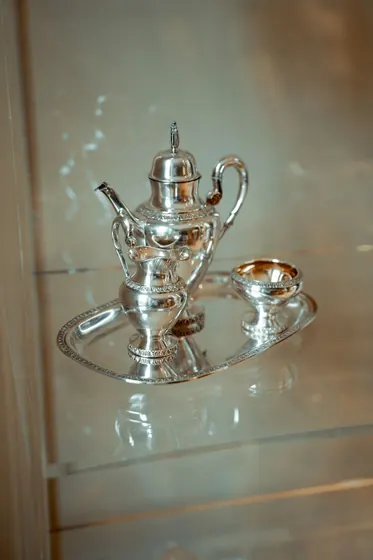
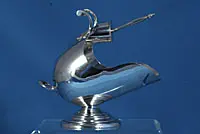
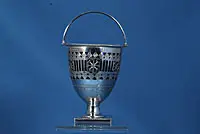
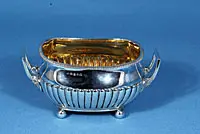
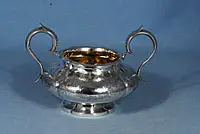
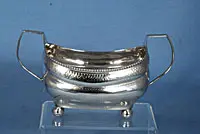
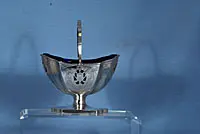
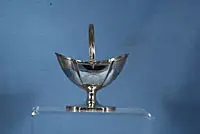
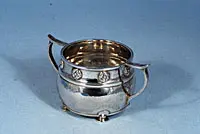
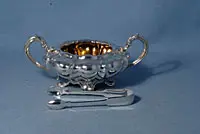
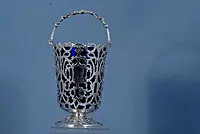
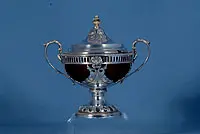
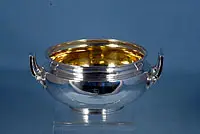
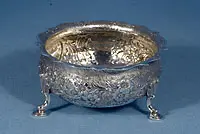
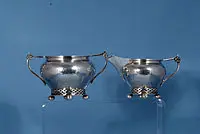
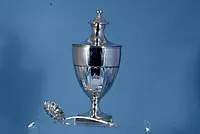
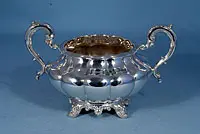
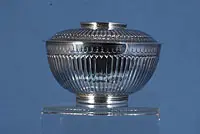
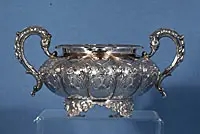
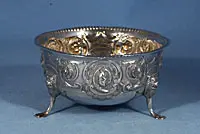
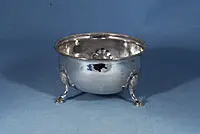
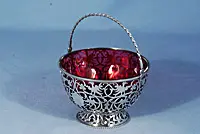
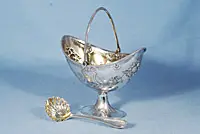
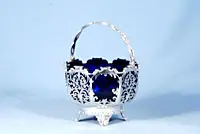
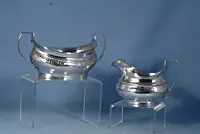
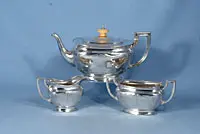
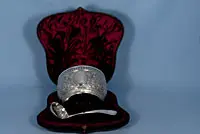
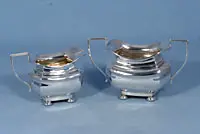
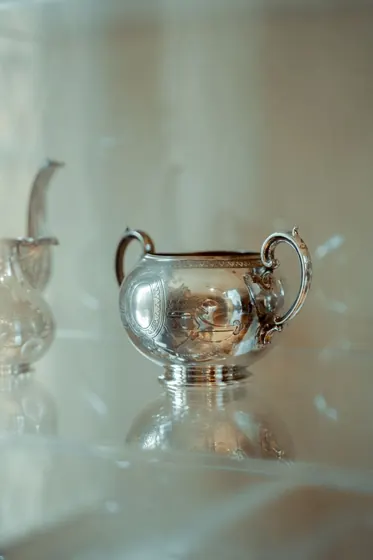
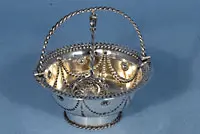
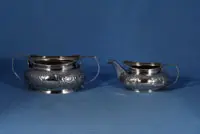
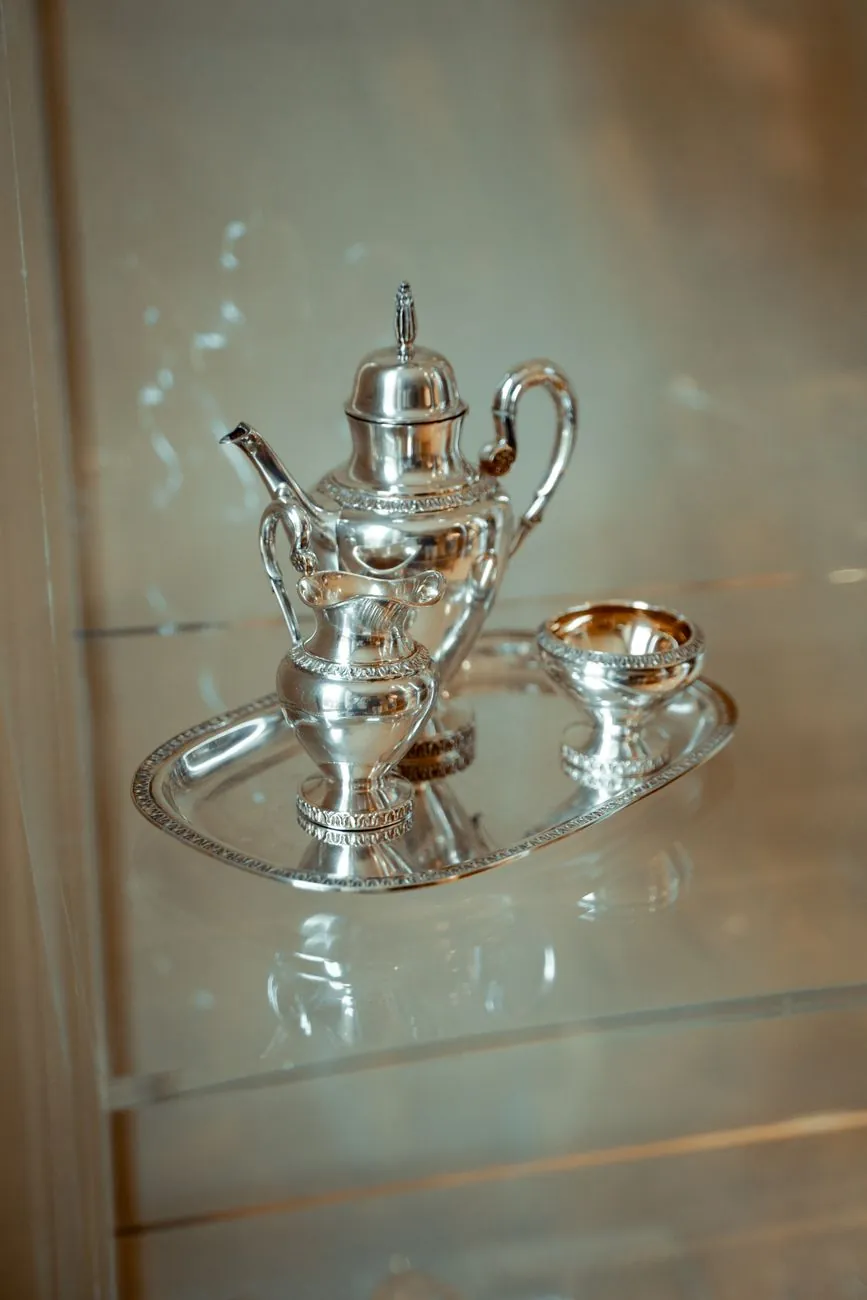
Sugar arrived on the tea table before milk did, and the silver bowl for it is among the earliest pieces of tea equipment. Queen Anne and early Georgian sugar bowls are plain hemispheres on a ring foot, with a cover that has its own foot rim and can be turned over as a saucer or spoon tray. Vase-shaped covered bowls and open baskets followed. From about 1800 the sugar basin became a wide two-handled vessel, made as the partner of the teapot and cream jug.
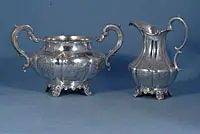
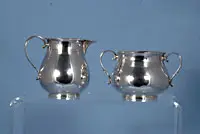
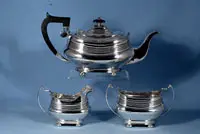
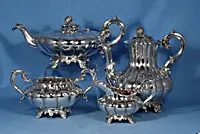
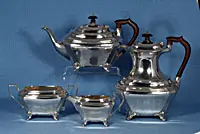
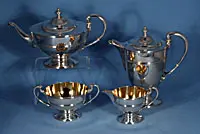
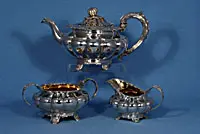
In a service, the basin shows the style most clearly, because its handles and foot repeat those of the pot. Interiors were often gilded. Check both handle joints, the foot, and whether the body has later embossing. A basin sold alone has usually been separated from a set, so its date and maker are a help in finding companions.
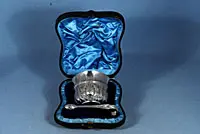
Fifty-two records are held, 1705 to 1942, the earliest from the reign of Queen Anne. Many are basins belonging to three and four-piece tea services. William Hunter, James Fray, Joseph Gloster and A. E. Jones are among the makers.
The catalogue holds 52 records filed under sugar bowls, dated 1705 to 1942. They are listed newest first.
 Illustration
In the catalogue
- Records
- 52
- Hallmark dates
- 1705 to 1942
- Makers
- A. E. Jones (2), William Hunter (2), James Fray (2), Joseph Gloster (2).
- Assay offices
- London (21), Dublin (6), Sheffield (5), Birmingham (4).
- Periods
- Victorian (17), George III (13), George V (9).