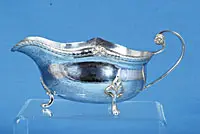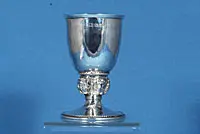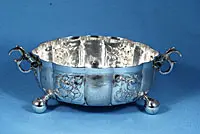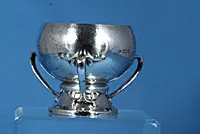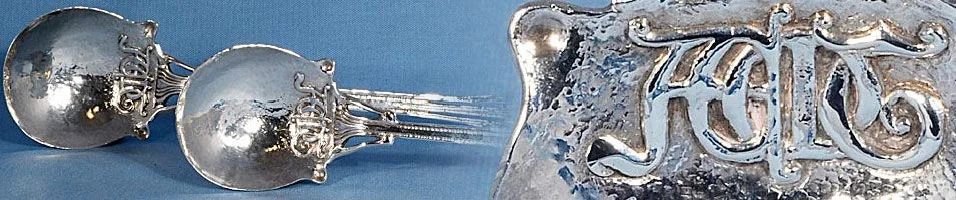
Kind of silver
Arts and Crafts
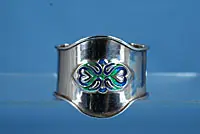
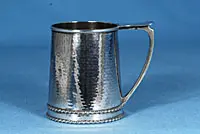
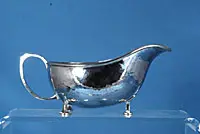
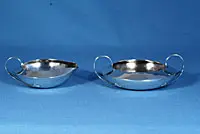
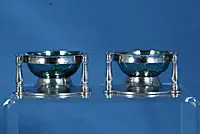
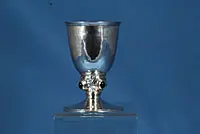
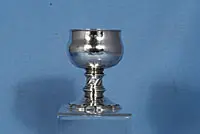
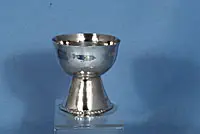
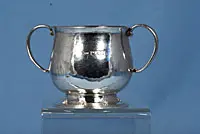
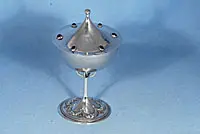
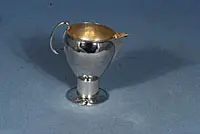
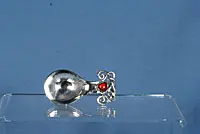
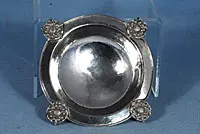
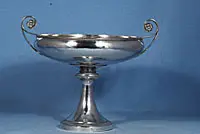
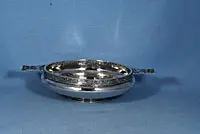
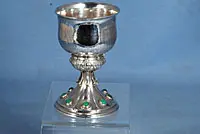
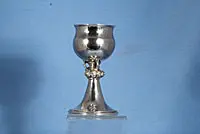
The Arts and Crafts movement brought the hammer back into view. From the founding of C. R. Ashbee's Guild of Handicraft in 1888, a group of designers and small workshops rejected machine finish in favour of silver raised by hand, with the planishing marks left on the surface. Ornament was sparing: a band of chased leaves, applied wirework, a cabochon stone or a panel of enamel.
By the Edwardian years the look had spread from guild workshops to commercial firms. A. E. Jones in Birmingham, Omar Ramsden and Alwyn Carr in London, Liberty with its Cymric range and later H. G. Murphy all worked in versions of it into the 1930s. Bowls, caddy spoons, porringers, tazzas, boxes and napkin rings are the typical objects. Collectors look for a signature or designer's mark in addition to the hallmark, and for an even hand-hammered surface. Machine-imitated hammering is regular and shallow by comparison.
This is one of the larger sections, with 144 records between 1900 and 1938. Ramsden, Jones, Archibald Knox for Liberty and Murphy account for most of the attributed pieces.
The catalogue holds 144 records filed under arts and crafts, dated 1900 to 1938. They are listed newest first.
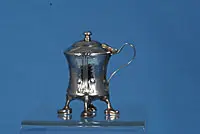
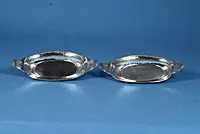
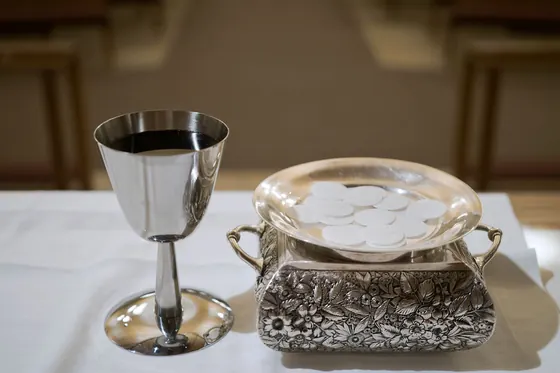
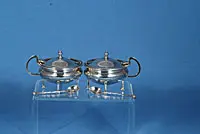
 Illustration
In the catalogue
- Records
- 144
- Hallmark dates
- 1900 to 1938
- Makers
- Omar Ramsden (68), A. E. Jones (43), Archibald Knox (Liberty and Co) (6), H. G. Murphy (5).
- Assay offices
- London (85), Birmingham (49), Chester (2), Sheffield (1).
- Periods
- George V (92), Edward VII (41), George VI and Edward VIII (10).